

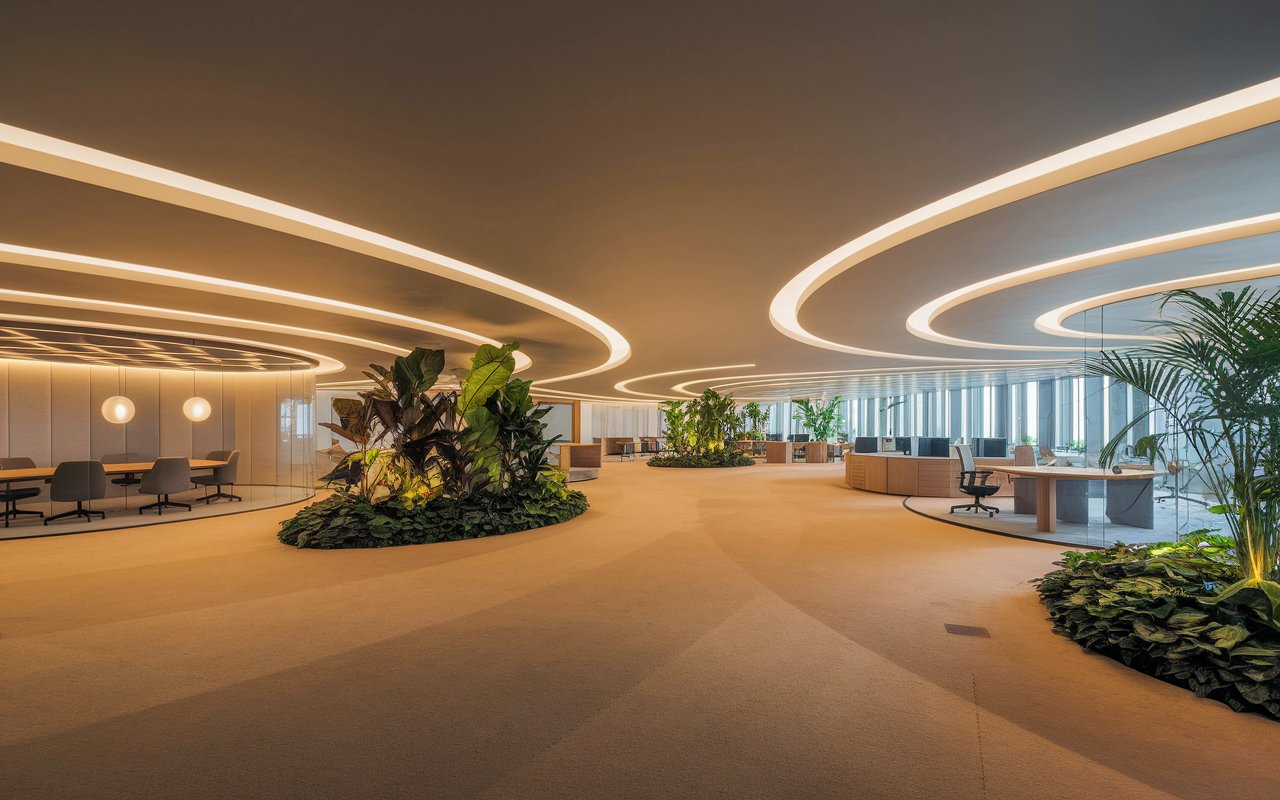
As we step into 2026, the role of office design has moved well beyond aesthetics. It has become a strategic business tool that influences talent retention, employee well-being, organizational culture, productivity, and even corporate brand perception. The rapid acceleration of hybrid and flexible work models, combined with changing expectations from a multi-generational workforce, means that workplace interiors are being redesigned not just for function but for human experience and organizational impact.
In this context, today’s leading companies are rethinking their built environments with deliberate purpose focusing on adaptability, technology, sustainability, wellness, and personalization. This shift is not driven by trends for their own sake, but by outcomes that matter workplaces that attract talent, support diverse modes of work, and deliver measurable business value.
Below are the top office interior design trends for 2026, drawn from a mix of industry publications, design forecasts, and workplace strategy research.
1. Hybrid-first and activity-based work environments
One of the biggest shifts shaping office design in 2026 is the normalization of hybrid work. Workplaces are no longer evaluated solely by the number of desks. Instead, design is organized around the activities people perform — whether that is deep focus, collaboration, learning, or social connection. Activity-based work zoning is replacing rigid, job title–driven layouts, giving employees choice and autonomy in how they engage with the space. These multifunctional zones increase space utilization efficiency and reduce the waste of fixed, underused real estate.
What this means in practice:
Workplaces are designed with distinct neighborhoods or hubs with calm focus pods, dynamic collaboration spaces, interactive team hubs, social lounges, and adaptive meeting zones – all seamlessly integrated. This encourages natural movement and makes the office feel like a purposeful place to be, not just a place to sit.
2. Human-centric design focused on wellness and comfort
Workplace design is finally placing human comfort at the center. This goes beyond ergonomic chairs and adjustable desks. In 2026, designers are crafting environments where employees feel a sense of control over their physical surroundings — from lighting and acoustics to temperature and layout. Spaces are designed to support mental focus and physical comfort, not just task execution.
Examples of this shift include:
- Quiet focus areas or booths for uninterrupted concentration
- Natural light maximization and circadian-friendly lighting
- Varied seating types that appeal to diverse preference profiles
- Calm corner spaces with softer lighting and enhanced acoustics
This trend aligns with research showing that environments emphasizing comfort and personal control can significantly boost wellbeing, creativity, and satisfaction.
3. Flexible, modular design that adapts over time
With business priorities evolving faster than ever, workplaces in 2026 are being built for change. Fixed layouts are out; modular and reconfigurable environments are in. Movable walls, mobile furniture, and multifunctional zones allow organizations to pivot quickly – whether to accommodate team growth, new technologies, or changing work routines.
Modular design is especially relevant for companies in dynamic markets, where growth expectations and operational models can shift rapidly. It also supports hybrid work by making it trivial to reallocate areas for collaboration, retreat, learning, or wellness without expensive renovations.
4. Biophilic and sustainability-driven workspaces
In 2026, offices are going beyond token greenery. Biophilic design, which integrates nature into built environments, is increasingly recognized for its powerful benefits: stress reduction, improved air quality, enhanced focus, and a better sense of wellbeing. Biophilic elements such as indoor plant walls, natural timber finishes, water features, and ample daylighting are becoming mainstream components of office interiors.
At the same time, sustainability is no longer optional. Offices are now designed with circular materials, energy-efficient lighting, low-impact finishes, and recyclable or upgradable furniture. These design choices reduce environmental footprint while appealing to employees and clients who value responsible organizations.
5. Acoustic and private solutions for the modern workplace
Open plan offices have dominated the corporate landscape for years, but they have a persistent challenge: noise and distraction. In 2026, acoustic design becomes fundamental, not optional. Offices are intentionally designed to manage sound through strategic zoning, sound absorbing materials, quiet focus rooms, and transition spaces that buffer noise between collaborative hubs and concentration zones.
These acoustic environments support better remote and hybrid collaboration, video calls, and concentrated work, all of which remain central to daily workflows.
6. Smart, responsive spaces enabled by technology
Technology is weaving deeper into workplace interiors, not as a novelty but as an enabler of better experience. Smart buildings and sensors are used to monitor occupancy, adjust lighting and temperature automatically, manage energy usage, and provide real-time insights into space utilization. This integration supports sustainable operations and ensures that physical space responds intelligently to the way people actually work.
From app-based space reservations to touchless entry systems and responsive climate control, technology at the workplace is not just about convenience – it is about operational efficiency and user experience.
7. Personalization, character, and narrative-driven spaces
The standardized corporate office aesthetic is fading. In its place is a growing interest in character-driven design that reflects company values, culture, and identity. Offices in 2026 are crafted with intentional design gestures – whether through materiality, texture, color palette, or curated art – to make spaces feel authentic, memorable, and emotionally connected to the people who use them.
Rather than sterile, homogenized interiors, organizations are embracing personality, storytelling, and a sense of place to build deeper emotional engagement.
8. Inclusivity and accessibility as design imperatives
Workplace design in 2026 is expanding beyond aesthetics and function to embrace broader principles of inclusion and accessibility. Spaces are planned to accommodate diverse needs, from physical mobility to sensory differences, ensuring that all employees feel welcome and supported. This includes thoughtful pathfinding, varied seating options, adjustable workstations, and quiet zones designed for neurodivergent users.
Inclusive design is now a key component of talent engagement strategies and is often included in corporate brand commitments.
The office of 2026 is not a static backdrop. It is a dynamic, human-centered ecosystem designed to support hybrid work, promote wellbeing, optimize performance, and express organizational identity. The best workplace designs balance flexibility with structure, technology with humanity, and sustainability with resilience.
From hybrid-friendly layouts and smart building integration to biophilic spaces and modular environments, these trends reflect not what is fashionable, but what is strategic, sustainable, and future-ready.
As companies rethink the role of the office in a hybrid world, these design principles will guide how workplaces evolve to meet the needs of people, business, and culture – not just for 2026, but for the decade ahead.